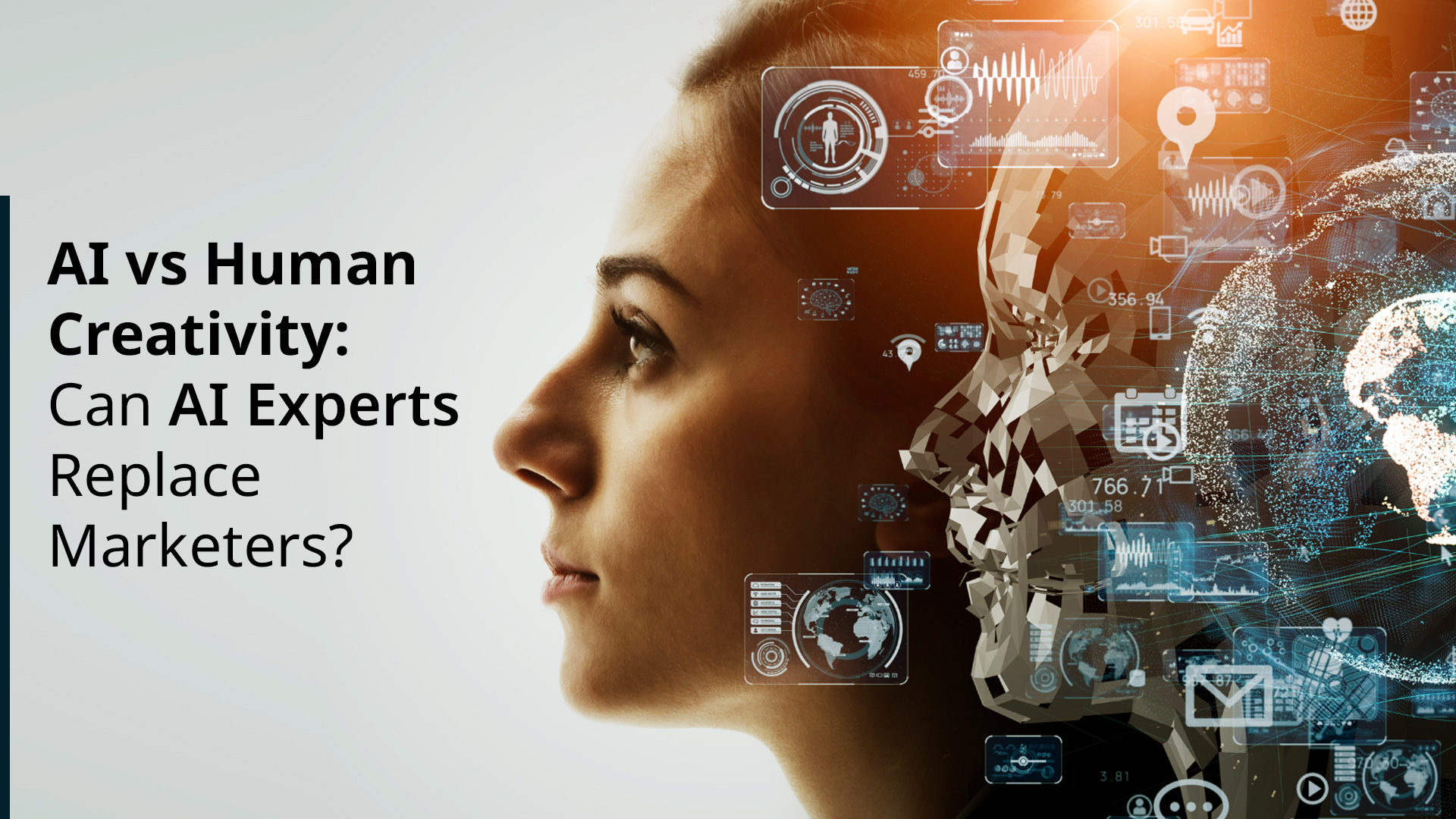
The intersection of artificial intelligence and creativity has become one of the most provocative and fascinating discussions of the modern era. For centuries, art has been regarded as a uniquely human domain — a manifestation of imagination, emotion, and intuition. Paintings, music, literature, and performance have served as windows into human thought, reflecting our culture, values, and emotional depth. Yet, with the rise of artificial intelligence, the question arises: can machines truly create art, or are they merely simulating creativity in a way that mimics human expression?
Artificial intelligence has evolved rapidly, employing advanced algorithms, machine learning, and deep neural networks to produce outputs that resemble human-made creations. From paintings and digital illustrations to music compositions and literary texts, AI-generated works have entered galleries, concert halls, and online platforms. While the technical capability is impressive, the debate over whether AI is genuinely creative continues to provoke discussion among artists, technologists, and philosophers alike.
Understanding Creativity
To explore the question of AI versus human creativity, it is essential first to understand what creativity entails. Creativity is more than assembling elements into a coherent output; it involves originality, intentionality, emotional resonance, and cultural awareness. Human artists draw upon personal experiences, social contexts, and emotional depth to craft works that resonate on multiple levels. They can communicate ideas, provoke thought, and evoke feelings in ways that reflect both individuality and shared human understanding.
Human creativity is often characterized by the capacity to imagine possibilities that do not yet exist, to reinterpret the world, and to challenge conventions. It is inherently unpredictable and subjective, influenced by intuition, spontaneity, and personal perspective. Artists make choices that carry meaning, and those choices are often informed by a lifetime of experiences, learning, and reflection.
AI, by contrast, operates differently. It learns patterns from vast datasets, identifies correlations, and generates outputs based on statistical probabilities. It does not experience emotion, personal growth, or cultural context. Its outputs are guided by algorithms rather than intention, and its “originality” emerges from recombining patterns in novel ways rather than from lived experience or conscious insight. Understanding these distinctions is crucial to evaluating whether AI can truly be considered creative.
The Emergence of AI Art
The development of AI-generated art has accelerated in recent years. Tools like DeepDream, DALL·E, Midjourney, and various generative adversarial networks (GANs) have demonstrated that machines can produce visually compelling works. These systems analyze thousands or millions of images, learning styles, structures, and patterns, and then generate new images that blend elements in unique combinations.
In music, AI can compose melodies, harmonize chord progressions, and mimic the style of famous composers. In literature, language models can generate poetry, essays, and fictional narratives that closely resemble human writing. Even complex creative tasks, such as designing virtual environments or producing interactive media, are increasingly within AI’s capabilities.
These advancements have led to exhibitions of AI-generated art in galleries and the sale of AI-created works at auctions for substantial sums. AI-generated music has been performed in live concerts, and digital storytelling platforms employ AI to craft immersive narratives. The technical proficiency of these tools is undeniable, raising the question of whether the essence of creativity lies in the output itself or in the process that produces it.
The Role of Human Input
It is important to note that AI-generated art often involves significant human input. Artists, programmers, and designers provide the data, guide the algorithms, and curate the final outputs. Human decisions shape the training datasets, select styles, and define the parameters within which AI operates. In this sense, AI functions as a collaborator, extending human creativity rather than replacing it.
For instance, an artist may use AI to generate a series of abstract images and then choose, modify, and refine the pieces to create a cohesive work. In music, a composer might employ AI to generate variations on a theme, selecting those that best align with their vision. The machine provides options and speed, but human judgment determines meaning, coherence, and emotional impact.
This collaborative model challenges traditional notions of authorship. If an AI system produces a painting or a piece of music, who is the creator — the machine, the human who guided it, or both? Legal and philosophical frameworks are still grappling with this question, highlighting the complexity of defining creativity in an age of intelligent machines.
AI and Style Imitation
One of AI’s most remarkable capabilities is its ability to imitate human styles. GANs and neural networks can learn the visual characteristics of specific artists, replicate brushstrokes, and produce works that resemble famous paintings. Similarly, language models can emulate the voice and style of literary figures, while AI music programs can replicate the composition techniques of classical and contemporary musicians.
While impressive, style imitation differs from genuine creativity. AI does not originate the style; it learns it from existing works. The machine’s “creativity” is derivative, relying on human input and preexisting patterns. It can produce surprising combinations, but these innovations are constrained by the data it has encountered. Human artists, in contrast, can invent entirely new forms and push boundaries in unpredictable ways.
The debate over imitation versus originality raises fundamental questions about the nature of creativity. Is the act of generating something aesthetically pleasing sufficient to qualify as art, or is intentionality and cultural awareness necessary? AI challenges the traditional criteria, prompting society to reconsider how creativity is defined and valued.
Emotional Resonance and Meaning
Art is often valued for its ability to evoke emotion, convey ideas, and reflect shared human experiences. While AI can produce aesthetically appealing works, its lack of consciousness and subjective experience limits its capacity to imbue art with meaning. Machines do not feel joy, sorrow, love, or despair; they cannot reflect on their existence or cultural identity.
Human creativity, by contrast, is deeply intertwined with emotion and intention. A painting, poem, or musical composition carries layers of significance that emerge from the creator’s perspective, experiences, and worldview. It communicates not only technical skill but also thought, reflection, and emotion. This depth is challenging, if not impossible, for AI to replicate authentically.
Some argue that audience perception matters more than the creator’s intent. If a viewer experiences emotion or finds meaning in an AI-generated work, can it be considered art? This perspective emphasizes the social and interpretive aspects of creativity, suggesting that even AI outputs can hold value if they provoke thought or elicit response. Nevertheless, the distinction between mechanically produced outputs and lived, intentional creation remains significant.
Collaboration Between AI and Human Artists
Rather than framing AI as a competitor to human creativity, many experts advocate for viewing it as a collaborative partner. AI can enhance human creativity by providing inspiration, accelerating experimentation, and generating alternatives that may not have been conceived independently.
For example, visual artists can explore novel forms by allowing AI to propose variations on a concept. Writers can overcome creative blocks by using AI-generated prompts or draft passages. Musicians can experiment with AI-generated harmonies or rhythms, discovering combinations that might have been overlooked.
This collaborative approach emphasizes the complementary strengths of humans and machines. Humans provide emotional depth, intention, and interpretive judgment, while AI contributes speed, pattern recognition, and computational creativity. Together, they can produce works that neither could achieve alone, expanding the boundaries of artistic expression.
Ethical and Philosophical Considerations
The rise of AI-generated art raises important ethical and philosophical questions. Intellectual property rights, authorship, and attribution are areas of ongoing debate. If an AI system produces a commercially successful work, who owns the rights? How should credit be assigned when human and machine contributions are intertwined?
There are also concerns about the potential devaluation of human artistry. If machines can produce convincing art at scale, will society begin to undervalue the labor, skill, and emotional investment of human artists? Conversely, AI could democratize creativity, allowing individuals without formal training to produce high-quality artistic works, broadening access and participation.
Philosophically, AI challenges traditional ideas about what it means to be creative. Creativity has long been seen as a hallmark of human intelligence and consciousness. AI forces us to reconsider whether originality and expression require consciousness or whether algorithmic generation can be recognized as a valid form of creativity.
Case Studies and Examples
Several real-world examples illustrate the evolving relationship between AI and art. AI-generated paintings have been exhibited in galleries and even sold at prestigious auctions, fetching substantial sums. Music created by AI has been performed by orchestras and released on streaming platforms. Literary works generated by AI have been published and analyzed for their narrative coherence and stylistic innovation.
These examples demonstrate both the potential and the limitations of AI in creative domains. While the output can be impressive and commercially viable, it often lacks the depth, context, and emotional resonance that characterize human-created art. The human role in guiding, curating, and interpreting AI-generated works remains critical.
The Future of AI and Creativity
Looking ahead, the future of AI in art is likely to involve increasingly sophisticated collaboration between humans and machines. Advances in machine learning, neural networks, and cognitive computing will allow AI to generate more nuanced, context-aware, and aesthetically complex works.
AI may also contribute to entirely new forms of creativity that are uniquely hybrid — art that emerges from the interplay between human intention and machine suggestion. These collaborations could produce experiences that challenge conventional notions of art, aesthetics, and authorship.
Education and artistic training will need to adapt, equipping creators with the skills to work alongside intelligent systems. Understanding how to leverage AI for inspiration, experimentation, and refinement will become a crucial aspect of creative practice