In recent years, chatbots have become a central part of digital communication. From customer support to educational platforms, these intelligent systems are transforming how humans interact with technology. Among them, ChatGPT has gained particular attention for its ability to understand natural language, generate coherent responses, and even simulate human-like conversation. But how do chatbots like ChatGPT actually work? This article breaks down the complex technology behind modern conversational AI, explaining it in a simple, accessible way while exploring its applications, advantages, limitations, and future potential.
Understanding Chatbots
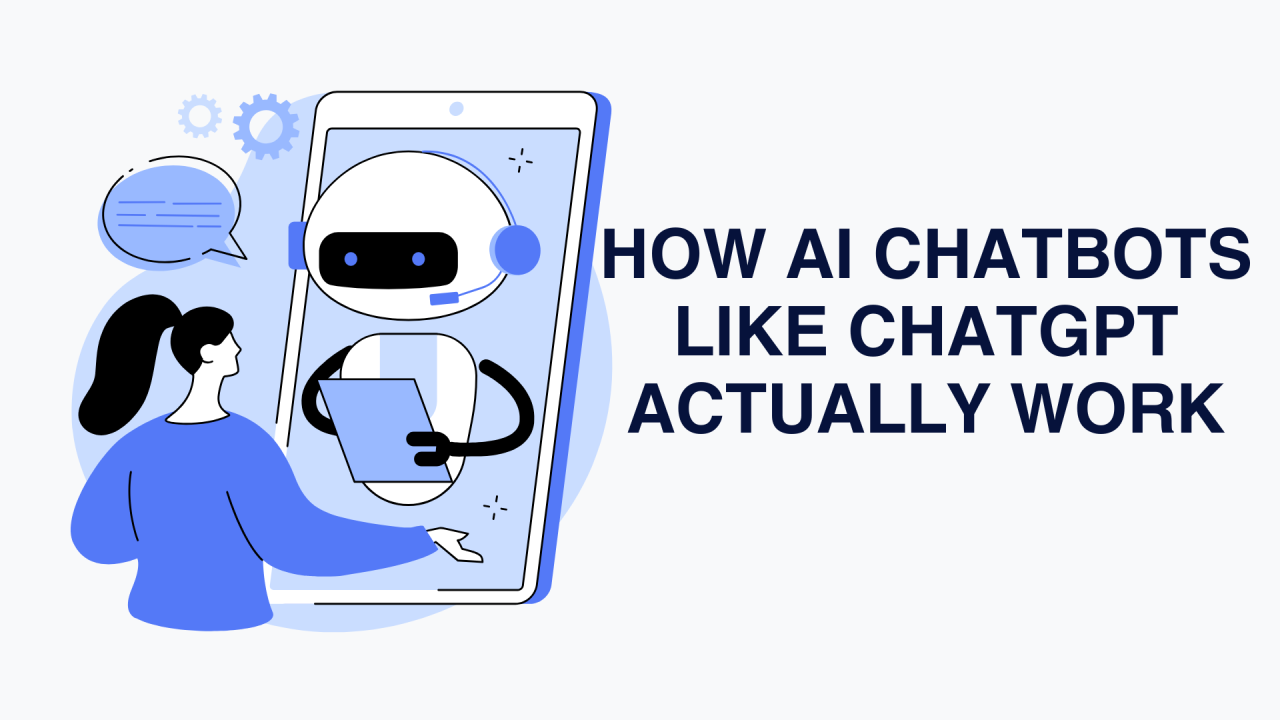
A chatbot is a software program designed to communicate with humans using natural language. Chatbots can operate through text, voice, or even a combination of both, and they are used in a variety of sectors including business, healthcare, education, and entertainment. The primary goal of a chatbot is to understand user queries and provide helpful, contextually appropriate responses.
Chatbots can be broadly classified into two categories: rule-based and AI-driven. Rule-based chatbots follow predefined rules and scripts, providing responses only to specific inputs. They are simple to implement but lack flexibility and fail when queries fall outside their programmed knowledge. AI-driven chatbots, like ChatGPT, operate differently. They use advanced algorithms and machine learning models to understand context, interpret meaning, and generate responses dynamically. This makes them far more versatile and capable of handling a wide range of conversations.
The Technology Behind ChatGPT
ChatGPT is based on a type of artificial intelligence known as natural language processing (NLP). NLP is a field that combines computer science, linguistics, and machine learning to enable computers to understand, interpret, and generate human language. ChatGPT, specifically, is built upon a type of machine learning model called a transformer, which has revolutionized NLP over the past few years.
Transformers and Neural Networks
Transformers are deep learning models designed to process sequences of data, making them ideal for tasks involving language. Unlike earlier models, transformers can process entire sequences of text simultaneously rather than word by word, allowing them to understand context and relationships between words more effectively. This capability is crucial for generating coherent and contextually relevant responses.
Neural networks, which underpin transformers, are computational models inspired by the structure of the human brain. They consist of layers of interconnected nodes, or neurons, which process input data and produce output. In the case of ChatGPT, the neural network has been trained on vast amounts of text from the internet, books, and other sources, allowing it to recognize patterns, understand grammar, and learn associations between words and phrases.
Training the Model
The process of training a model like ChatGPT involves exposing it to massive datasets containing diverse language examples. During training, the model adjusts the weights of connections between neurons to minimize the difference between its predicted output and the actual text in the dataset. This process, called supervised learning, allows the model to learn statistical patterns in language, such as grammar, syntax, and common phrases.
In addition to supervised learning, ChatGPT undergoes a phase called reinforcement learning with human feedback. In this phase, human trainers evaluate the model’s responses and provide guidance on quality, relevance, and tone. This step helps the model align more closely with human expectations and improves its ability to generate helpful, safe, and coherent responses.
How ChatGPT Understands Queries
When a user inputs a question or statement, ChatGPT does not “understand” it in the human sense. Instead, it processes the input as a sequence of tokens, which are units of language such as words or subwords. The model then analyzes the relationships between these tokens and uses the patterns it has learned to predict the most likely response.
Context plays a crucial role in this process. ChatGPT maintains a representation of the conversation history, allowing it to generate responses that are relevant to the ongoing discussion. This enables the model to provide answers that are coherent over multiple exchanges, remember details mentioned earlier, and maintain a conversational flow.
Generating Responses
Once the model has analyzed the input, it generates a response using a probabilistic approach. For each token in the response, the model predicts a probability distribution over possible next tokens. It then selects the token with the highest likelihood, continuing this process until the response is complete. This method allows ChatGPT to generate human-like text that is grammatically correct and contextually appropriate.
The response generation process can be fine-tuned using techniques such as temperature and top-k sampling. Temperature controls the randomness of the output, with higher values producing more creative responses and lower values yielding more deterministic results. Top-k sampling limits the selection of tokens to the most probable options, improving coherence while allowing variation.
Applications of ChatGPT
ChatGPT has a wide range of applications across industries, making it a versatile tool for both businesses and individuals.
Customer Support
Many companies use chatbots like ChatGPT to handle customer inquiries, reducing response time and operational costs. AI chatbots can provide instant answers to frequently asked questions, guide users through troubleshooting, and escalate complex issues to human agents when necessary.
Education
In educational settings, ChatGPT can serve as a virtual tutor, assisting students with explanations, practice problems, and learning resources. Its ability to generate clear, concise, and personalized responses enhances the learning experience and provides support outside the classroom.
Content Creation
Writers, marketers, and content creators use ChatGPT to brainstorm ideas, draft articles, generate social media posts, and even compose poetry or stories. The model’s ability to produce human-like text quickly makes it a valuable tool for creative and professional projects.
Healthcare
In healthcare, ChatGPT assists in providing general medical information, answering patient queries, and supporting telemedicine platforms. While it cannot replace professional medical advice, it helps streamline communication and provide accessible guidance.
Research and Data Analysis
Researchers use ChatGPT to summarize information, generate explanations, and provide insights from complex data. Its ability to process large volumes of text and generate coherent summaries saves time and enhances understanding.
Advantages of Chatbots Like ChatGPT
AI chatbots offer several benefits that make them increasingly popular in various domains.
24/7 Availability
Unlike human operators, chatbots can function continuously without fatigue, providing instant support and assistance at any time.
Scalability
Chatbots can handle multiple conversations simultaneously, allowing organizations to manage high volumes of user interactions without increasing staffing.
Consistency
AI chatbots maintain consistent responses, ensuring that users receive reliable information regardless of when or how often they interact with the system.
Personalization
Through analysis of conversation history and user input, chatbots can provide personalized responses, adapting to individual preferences and needs.
Limitations of ChatGPT
Despite its capabilities, ChatGPT has limitations that users should be aware of.
Lack of True Understanding
ChatGPT does not possess consciousness or genuine understanding. Its responses are based on patterns and probabilities, meaning it may provide plausible-sounding but incorrect or misleading information.
Bias and Ethics
The training data used for ChatGPT contains biases present in human language and online content. As a result, the model may inadvertently generate biased or culturally insensitive responses. Continuous monitoring and careful dataset selection are essential to mitigate these risks.
Dependence on Data
ChatGPT’s knowledge is limited to the data it was trained on, which may become outdated over time. It does not have real-time awareness of current events unless integrated with external information sources.
Contextual Challenges
While ChatGPT can maintain conversation context to some extent, long or complex discussions may lead to inconsistencies, forgotten details, or misunderstandings.
Best Practices for Using ChatGPT
To make the most of AI chatbots like ChatGPT, users and organizations should follow best practices.
Clear Input
Providing clear and specific input helps the model generate accurate and relevant responses. Ambiguous or vague queries may result in less useful answers.
Verification of Information
AI-generated responses should be verified, especially for critical or sensitive information. Users should cross-reference with authoritative sources when accuracy is essential.
Ethical Usage
Organizations should use chatbots responsibly, avoiding applications that could harm users or disseminate misleading information. Transparent disclosure of AI usage helps maintain trust and accountability.
Integration with Human Oversight
Combining AI chatbots with human oversight ensures that complex, sensitive, or nuanced queries receive appropriate attention. This hybrid approach leverages the efficiency of AI while preserving human judgment.
The Future of Chatbots
The future of chatbots like ChatGPT is promising, with ongoing advancements in natural language understanding, contextual awareness, and multimodal capabilities. Future models are expected to integrate text, voice, and visual inputs, allowing more immersive and interactive conversations. They may also access real-time data, enabling accurate responses to current events and personalized recommendations.
As AI technology continues to evolve, chatbots will become more adept at understanding human intent, exhibiting nuanced communication, and supporting decision-making processes. Ethical development, transparent usage, and careful monitoring will be critical to ensuring that these tools enhance human productivity and well-being without causing harm.