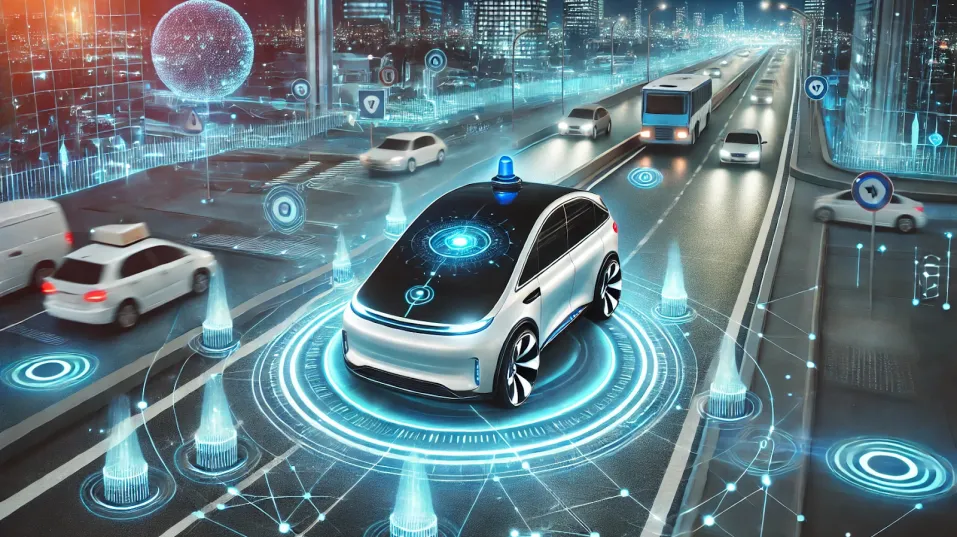
The concept of autonomous vehicles has moved far beyond science fiction. What once seemed like a futuristic dream is rapidly becoming a transformative reality, driven by breakthroughs in artificial intelligence, machine learning, robotics, and sensor technologies. As global industries evolve and societies strive for safer, more efficient, and more sustainable transportation systems, AI-powered autonomous vehicles are emerging as one of the most promising technologies of the modern era. Their development signals a monumental shift in how people and goods move across cities, countries, and continents.
Autonomous vehicles represent more than an upgrade to existing transportation. They embody a new philosophy of mobility where machines think, learn, adapt, and navigate in ways that rival human capability. These vehicles process vast amounts of visual, auditory, and spatial data in real time, making decisions that prioritize safety and efficiency. They aim to reduce accidents, ease traffic congestion, and offer new possibilities for individuals who struggle with mobility limitations.
As AI algorithms become more sophisticated, autonomous vehicles are moving closer to mainstream adoption. The innovations shaping this field in 2025 highlight a future where digital intelligence and human needs intersect seamlessly. From self-driving cars and delivery robots to autonomous trucks and aerial mobility systems, AI is redefining how transportation will operate for decades to come.
This article explores the evolution of autonomous vehicles, the technologies powering them, the challenges that remain, and the immense potential they hold for transportation, logistics, urban planning, and global society.
The Evolution Toward Intelligent Mobility
The journey toward autonomous vehicles began long before AI became a dominant force in technology. Earlier attempts relied on rule-based systems and basic sensors, but these limitations made fully autonomous driving impossible. The arrival of modern AI changed everything. Machine learning and deep learning enabled vehicles to interpret their environment with unprecedented accuracy, allowing them to identify objects, understand road patterns, and predict human behavior.
Over the years, autonomous vehicles have evolved through progressive stages of automation. While many current vehicles still require human oversight, advanced prototypes and fleet deployments demonstrate the viability of full autonomy in controlled environments. The combination of AI, sensor fusion, and advanced computing platforms has turned autonomous driving into a feasible and rapidly expanding field.
Autonomous mobility is not limited to personal vehicles. Industries such as logistics, agriculture, mining, and public transportation have adopted autonomous systems to enhance productivity, safety, and efficiency. Delivery services experiment with autonomous drones and ground robots. Ports deploy self-driving transport systems to manage goods. Ride-hailing companies invest heavily in autonomous fleets. Each of these developments reflects the broader trend toward AI-driven mobility solutions.
As technology advances, autonomous vehicles are becoming smarter, safer, and more adaptable. They are transforming transportation from a human-controlled system to a hybrid network where humans and intelligent machines share the road.
AI: The Brain Behind Autonomous Vehicles
AI is the central intelligence that enables self-driving vehicles to navigate independently. Unlike traditional cars that rely on human decision-making, autonomous vehicles depend on AI systems capable of perceiving the environment, interpreting complex scenarios, and making driving decisions instantly.
The AI powering autonomous vehicles uses layers of neural networks trained on countless hours of driving data. These models learn from real-world conditions, including various weather patterns, road types, traffic densities, pedestrian behavior, and rare events. Through this learning process, the vehicle develops an understanding of how to react to challenges that would otherwise require human intuition.
The core capabilities of AI in autonomous vehicles revolve around perception, prediction, and decision-making. Perception involves identifying everything around the vehicle, including other cars, pedestrians, obstacles, signs, and lane markings. Prediction models analyze how these objects are likely to move. Decision-making algorithms determine the safest and most efficient actions, such as adjusting speed, changing lanes, or responding to unexpected hazards.
These systems communicate continuously with sensors, onboard computers, and cloud platforms to ensure real-time accuracy. In many ways, the AI within autonomous vehicles functions like a digital driver with the ability to detect danger faster and react more precisely than human reflexes allow.
How Sensors and Data Power Autonomous Navigation
The sophistication of autonomous vehicles relies heavily on sensor technology. While AI provides the intelligence, sensors act as the vehicle’s eyes and ears. They gather information from the environment and deliver it to the AI system for interpretation.
Cameras capture visual information such as traffic signals, pedestrians, lane markings, and road conditions. LiDAR sensors emit light pulses to map the surroundings in three dimensions, creating detailed spatial awareness. Radar detects the speed and distance of surrounding objects, particularly in challenging weather conditions. Ultrasonic sensors help with close-range detection, assisting in tasks like parking or navigating tight spaces.
These diverse sensors work together in a process known as sensor fusion. By combining data from multiple sources, autonomous vehicles gain a more comprehensive understanding of their environment than any single sensor could provide. This multi-layered perception ensures accurate detection even in complex situations such as busy intersections or nighttime driving.
The volume of data produced is enormous. Every second, thousands of data points are processed in real time, requiring advanced computing systems capable of handling high-speed calculations. The integration of cloud computing, edge processing, and high-bandwidth communication networks enables autonomous vehicles to respond instantly to dynamic environments.
This powerful combination of sensors and data creates a level of awareness that surpasses human capabilities and lays the foundation for safer, more reliable autonomous navigation.
Machine Learning and Predictive Intelligence
A defining strength of autonomous vehicles is their ability to learn and improve continuously. Machine learning algorithms analyze past driving experiences, identify patterns, and refine their responses. Over time, these systems become more adept at handling unusual scenarios that rarely occur but pose significant risks.
Predictive models play a crucial role in anticipating the behavior of pedestrians, cyclists, and other drivers. For example, an AI system can estimate whether a pedestrian is likely to step off the curb or whether a nearby car may change lanes without signaling. This predictive capability allows the vehicle to make proactive adjustments that enhance safety.
Deep learning enables the vehicle to recognize subtle cues such as body language, traffic flow patterns, and environmental changes. These insights allow the AI to create a probabilistic map of all possible outcomes, selecting the safest path forward.
As machine learning continues to advance, autonomous vehicles in 2025 can handle more complex environments than earlier models. They adapt to new conditions, learn from fleet-wide data, and become increasingly reliable in diverse driving scenarios.
Connected Infrastructure and Smart Mobility Ecosystems
Autonomous vehicles do not operate in isolation. Their success depends on the broader ecosystem of connected infrastructure, smart cities, cloud networks, and intelligent transportation systems. Vehicle-to-vehicle communication allows cars to share information about speed, direction, and hazards. Vehicle-to-infrastructure communication links cars to traffic signals, road sensors, and digital signage.
This connectivity enhances safety and efficiency. For example, traffic lights can adjust their timings based on real-time traffic flow or provide autonomous vehicles with data to optimize their routes. Connected road systems can alert vehicles to accidents, construction zones, or weather hazards ahead.
Smart cities benefit from autonomous mobility through reduced congestion, lower emissions, and more efficient transportation networks. Public transportation systems can integrate autonomous shuttles to provide first-mile and last-mile services. Delivery services can deploy autonomous robots to distribute packages in urban neighborhoods.
The integration of autonomous vehicles with connected infrastructure represents a shift toward a more intelligent, coordinated mobility system where technology works harmoniously to optimize urban living.
Autonomous Vehicles in Logistics and Supply Chain Transformation
While consumer adoption of self-driving cars remains a gradual process, the logistics industry has embraced autonomous vehicles rapidly. The demand for faster deliveries, efficient transportation, and reliable supply chains has accelerated investment in autonomous trucks, delivery robots, and automated distribution networks.
Long-haul trucking is one of the most promising uses of autonomous technology. Self-driving trucks operate consistently without fatigue, improving safety and reducing transportation delays. These vehicles can drive long distances with minimal human intervention, optimizing fuel efficiency and reducing operational costs.
In urban environments, autonomous delivery robots are emerging as viable solutions for last-mile delivery. These compact, AI-driven devices navigate sidewalks, streets, and building entrances to deliver packages with precision. They reduce traffic congestion and lower emissions by eliminating the need for large delivery vehicles on short routes.
Autonomous vehicles also transform warehouse operations. Automated forklifts, sorting robots, and transport systems streamline inventory management and reduce the need for manual handling of goods. This level of automation enhances safety and accelerates order fulfillment.
As global commerce continues to expand, autonomous vehicles will play an essential role in creating resilient, responsive, and efficient supply chains.
AI Ethics and Safety in Autonomous Driving
The rise of autonomous vehicles brings with it important ethical considerations. Safety remains the primary priority. While autonomous vehicles are statistically safer than human drivers, societies continue to debate how AI should handle morally complex decisions.
AI must be trained to minimize harm, predict hazardous situations accurately, and prioritize human life under all circumstances. This requires rigorous testing, transparent data, and extensive validation across diverse environments.
Regulation is evolving to keep pace with the technology. Governments around the world are implementing safety standards, certification processes, and operational guidelines for autonomous vehicles. These regulations address issues such as liability, data privacy, cybersecurity, and human oversight.
Cybersecurity is particularly critical. Autonomous vehicles must be protected against hacking attempts that could compromise control, safety, or user data. AI systems must include robust security protocols, encryption, and continuous monitoring.
Ethical considerations also extend to fairness and accessibility. Autonomous mobility should serve all communities, including individuals with disabilities, people living in underserved areas, and those who depend on affordable transportation.
Responsible development is essential for building public trust and ensuring that autonomous vehicles enhance society rather than introduce new risks.
Challenges Slowing Down Full Autonomy
Despite rapid progress, the path to fully autonomous driving still faces several challenges. Adverse weather conditions such as heavy rain, snow, or fog can impair sensors. Unpredictable human behavior also complicates AI decision-making. Infrastructure readiness varies across regions, affecting the reliability of autonomous navigation.
Certain environments remain difficult for autonomous vehicles, including construction zones, rural roads, densely populated urban centers, or locations with inconsistent road markings.
There are also economic challenges. The cost of advanced sensors, high-performance computing, and continuous maintenance remains high. Widespread adoption will depend on cost reductions and mass production.
Public acceptance plays a role as well. Many people remain cautious about trusting AI-driven transportation, particularly in scenarios that require split-second judgment.
While these challenges are significant, they are not insurmountable. Continued innovation, testing, and investment will help resolve these issues, bringing fully autonomous transportation closer to reality.
The Future of AI-Driven Autonomous Mobility
The future of autonomous vehicles holds extraordinary promise. As AI continues to progress, vehicles will become smarter, safer, and more integrated into the fabric of everyday life.
Urban landscapes may evolve with fewer parking lots and more green spaces as shared autonomous fleets reduce the need for private car ownership. Traffic congestion may decline as AI optimizes route planning across entire cities. Road accidents could drop dramatically as human error is eliminated from driving.
Autonomous mobility will extend beyond ground transportation. AI-driven drones will deliver goods, transport medical supplies, and assist emergency services. Autonomous boats may support maritime transport. Even autonomous aerial taxis are being developed to revolutionize urban mobility.
The combination of AI, robotics, and smart infrastructure will create a future where transportation is more accessible, efficient, and sustainable than ever before.