The future of industry is unfolding in real time as robotics and artificial intelligence evolve from specialized tools into core drivers of progress across every major sector. What once existed as experimental technologies in research labs has now matured into integrated, intelligent systems capable of performing complex tasks, understanding patterns, making predictions, and collaborating with humans in highly adaptive ways. This transformation marks a turning point in global business and industrial development, reshaping how companies operate, how products are made, how services are delivered, and how societies function.
The rise of robotics and AI is not just a story of technological advancement. It is also a story of economic pressure, workforce evolution, sustainability demands, and the constant search for greater efficiency and innovation. Industries that once relied heavily on manual labor or repetitive processes are now reengineering themselves around intelligent automation. Workers are learning new skills, companies are restructuring old systems, and global competition is being redefined by technological capability rather than traditional resource advantages.
This article explores how robotics and AI are shaping the future of industry, the major trends driving this transformation, the opportunities and challenges ahead, and what organizations must do to thrive in this new industrial era.
The Rise of Intelligent Automation in Modern Industry
The integration of robotics and AI has advanced far beyond simple automation. Earlier industrial robots were rigid, pre-programmed machines limited to repetitive tasks. Today’s intelligent robots operate with sensors, computer vision, machine learning, and autonomous decision-making capabilities. They can adapt to changing environments, learn from data, and collaborate safely with human workers.
AI has become the brain behind industrial innovation, while robotics provides the physical capability to execute tasks with precision, speed, and consistency. Together, they form an ecosystem of smart automation that transforms industrial operations from the ground up.
The shift toward intelligent automation has accelerated due to several key factors:
Growing global competition
Rising labor shortages in manufacturing
Demand for high-quality, fast production
The shift toward digital business models
Increasing pressure for sustainability and resource efficiency
Industries that embrace this transformation early are gaining significant advantages, while those that lag risk losing competitiveness.
Robotics and AI Transforming Manufacturing
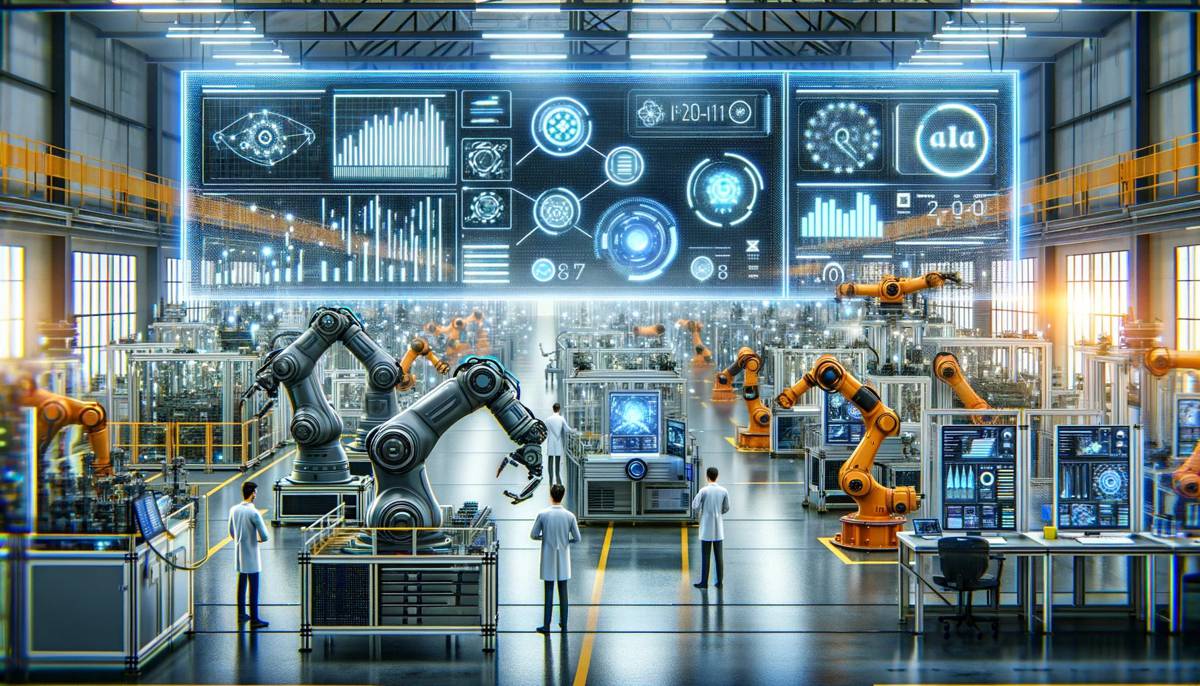
Manufacturing is experiencing the most profound transformation in its history. Intelligent robots now handle tasks that were once impossible for machines: assembling intricate components, picking delicate objects, adjusting their movements based on real-time feedback, and even predicting failures before they occur.
Robotic arms equipped with machine learning algorithms can improve their precision over time. Autonomous mobile robots navigate warehouses without human supervision. Vision systems inspect products with microscopic accuracy. Predictive AI analyzes data from equipment to prevent downtime. Together, these capabilities create a production environment defined by adaptability, consistency, and intelligent decision-making.
Manufacturers are also using AI-driven quality assurance systems to detect defects more accurately than the human eye. This eliminates waste and ensures that standards remain consistently high. Predictive systems that analyze vibrations, heat signatures, and sound patterns can warn operators when a machine is likely to fail, reducing maintenance costs and preventing costly interruptions.
The transformation is not only technical but also strategic. Manufacturers are shifting from traditional mass production models to more agile systems capable of customization at scale. Robotics and AI enable production lines to be adjusted quickly without extensive reconfiguration, giving businesses the flexibility to meet market demands with greater speed and accuracy.
Logistics and Supply Chain Automation
The logistics industry is undergoing a revolution powered by robotics and AI. Autonomous mobile robots move goods with speed and accuracy inside warehouses. Drones are being tested for medical deliveries in remote regions. AI-powered route optimization systems analyze traffic patterns, weather forecasts, and fuel costs to improve transportation efficiency.
Automated sorting systems handle thousands of packages per hour with unmatched precision. AI-powered inventory systems predict demand fluctuations and prevent stock shortages or oversupply. Real-time tracking supported by machine learning provides visibility into supply chain performance and helps identify potential issues before they escalate.
The integration of robotics and AI in logistics is reducing operational costs, speeding up order fulfillment, and improving customer satisfaction. Companies adopting these technologies are becoming more resilient as they reduce reliance on manual labor and minimize the risks associated with human error or resource limitations.
Robotics and AI in Construction
Construction has traditionally been a labor-intensive industry, but robotics and AI are transforming key aspects of this field. Autonomous machines can excavate, lay bricks, pour concrete, and transport materials. Meanwhile, AI systems assist in project planning, risk prediction, cost management, and safety analysis.
Drones inspect infrastructure, map construction sites, and monitor progress from above. AI algorithms analyze these images to identify structural issues, potential safety hazards, or deviations from plans. This enhances efficiency while reducing dangerous tasks for workers.
Robotic arms are increasingly used for precision tasks such as welding, drilling, and assembling components. These machines maintain accuracy even in challenging environments, reducing rework and improving structural quality.
The introduction of collaborative robots, or cobots, enables construction workers to partner with intelligent machines that handle repetitive or physically demanding tasks. This enhances safety, reduces injury risk, and frees skilled workers to focus on tasks requiring judgment and creativity.
As cities grow and infrastructure demands rise, robotics and AI will play a central role in meeting global construction needs more sustainably and efficiently.
Robotics in Healthcare and Medical Manufacturing
Healthcare is entering a new chapter defined by surgical robots, AI diagnostics, and intelligent hospital systems. Robotics supports precision-driven tasks such as minimally invasive surgery, sample handling, sterilization, and patient assistance. AI powers diagnostic tools that analyze medical images, predict disease progression, and guide treatment decisions.
Robotics is also revolutionizing pharmaceutical manufacturing, ensuring sterile conditions and precision in handling sensitive materials. AI models predict equipment failures, optimize chemical mixing, and maintain consistent product quality.
Intelligent robots in hospitals transport medications, assist with disinfection, and help manage inventory. AI systems analyze patient data to identify risks, streamline workflows, and improve outcomes. The merging of robotics and AI ensures safer procedures, faster recovery times, and more efficient healthcare operations.
Automotive and Advanced Robotics Systems
The automotive industry has long relied on robotics, but AI is pushing the field far beyond traditional automation. As vehicles themselves become smarter, their manufacturing also becomes more intelligent.
Robots equipped with AI can assemble complex components, manage delicate materials, and coordinate with other machines on the production line. Autonomous systems test vehicles, inspect parts, and simulate performance under various conditions.
AI-driven production analytics optimize scheduling, reduce waste, and improve energy efficiency. Intelligent robots ensure consistent quality while adapting to new designs or materials without extensive reprogramming. These advancements support the growing demand for electric vehicles, which require new manufacturing processes that prioritize precision and flexibility.
The Role of AI in Decision-Making and Industrial Management
Beyond automation, AI is transforming how industrial leaders plan, manage, and make decisions. Intelligent systems analyze massive datasets to identify patterns that humans may miss. These insights support critical decisions related to production, maintenance, supply chain management, and workforce strategy.
Predictive models help companies anticipate market trends. Optimization algorithms improve resource allocation. Real-time analytics provide visibility into operations and alert managers when conditions change.
This shift toward data-driven decision-making creates a more agile industrial environment where companies can respond to challenges quickly and efficiently. It reduces downtime, enhances consistency, and ensures that operations remain competitive in an increasingly fast-paced global market.
Collaborative Robots and Human-Machine Interaction
One of the most important advancements in modern industry is the rise of collaborative robots. Unlike traditional industrial robots that operate in isolated zones, cobots work side by side with human employees.
Cobots are designed with advanced sensors, vision systems, and safety features that allow them to detect human presence and adjust their actions accordingly. They assist with tasks that require precision, strength, or repetition, while humans handle functions that require judgment, creativity, or complex decision-making.
This partnership enhances productivity, improves workplace safety, and expands opportunities for workers to transition into more skilled roles. Cobots make automation accessible even to small and medium-sized enterprises that cannot afford large-scale systems.
The future of work will involve humans and intelligent machines collaborating seamlessly to achieve results that neither could accomplish alone.
AI and Robotics for Sustainability and Green Industry
Sustainability has become a global priority, and robotics and AI offer powerful solutions. Intelligent systems can reduce waste, lower energy consumption, recycle materials efficiently, and optimize the use of natural resources.
Robots designed for environmental tasks can inspect pipelines, detect pollution, clean hazardous sites, and monitor ecosystems. AI models help companies measure their carbon footprint, design greener operations, and comply with environmental standards.
Manufacturers are using robotics to reduce material waste, while AI-powered analytics optimize energy use across factories and supply chains. Smart agricultural robots improve crop yields while minimizing water usage and chemical sprays.
These technologies support global efforts to build a sustainable industrial future.
Challenges and Ethical Considerations
Despite the benefits, the rise of robotics and AI presents significant challenges that industries must address. Workforce displacement remains a major concern as automation replaces certain roles. This highlights the importance of reskilling programs that prepare workers for more advanced, technology-driven jobs.
Ethical questions also arise regarding transparency, algorithmic decision-making, and data privacy. Companies must ensure that AI systems operate responsibly and comply with regulations. Reliable oversight is essential to prevent bias and ensure fairness.
Safety remains a priority, especially as robots become more autonomous. Industries must implement rigorous standards to ensure that machines operate safely around human workers.
Cost and complexity can also be barriers for smaller companies. However, the growing availability of affordable and modular robotics solutions is making adoption easier across sectors.
The Future of Robotics and AI in Industry
The future industrial landscape will be defined by intelligent machines that learn, adapt, and collaborate. Autonomous robots will handle complex tasks with minimal supervision. AI systems will manage operations, optimize processes, and guide business strategy.
Factories will become fully connected ecosystems where data flows seamlessly between machines, sensors, workers, and managers. Supply chains will operate with real-time intelligence. Logistics systems will function autonomously. Construction sites will be safer and more efficient. Healthcare will benefit from precise robotic support and predictive analytics.
Industries that embrace this transformation will gain unprecedented productivity, flexibility, and competitiveness. Those that resist risk falling behind in a world driven by innovation, speed, and digital capability.
As robotics and AI continue to evolve, they will not replace human creativity or leadership. Instead, they will enhance human potential, empower new forms of work, and open opportunities for industries to solve complex challenges more effectively than ever before.